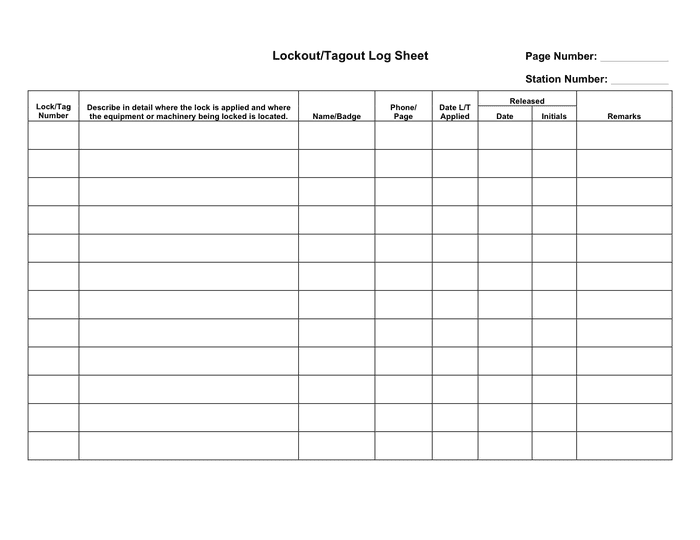
Maintenance teams work under pressure. Deadlines loom. Equipment downtime costs thousands per hour. In the rush to fix, clean, or service machinery, one misstep—a valve left open, a circuit re-energized too soon—can be catastrophic. That’s where lock out tag out log sheets come in. They aren’t just paperwork. They’re legal records, safety shields, and operational safeguards rolled into one.
Despite OSHA’s clear standards, non-compliance with energy control procedures remains one of the top 10 most frequently cited violations. A missing or poorly maintained log sheet is often the first sign of a broken system. This article breaks down what LOTO log sheets really do, how to implement them effectively, and where most facilities fail—so you can avoid preventable risks.
What Is a Lock Out Tag Out Log Sheet?
A lock out tag out log sheet is a documented record of every time energy-isolating devices are secured during maintenance or servicing of machinery. It logs who applied locks and tags, when, for what purpose, and when the system was safely re-energized.
Unlike the LOTO procedure itself—which outlines the step-by-step process—the log sheet is the audit trail. It proves compliance, tracks accountability, and supports incident investigations.
Core elements of a standard LOTO log sheet include: - Date and time of lockout initiation and removal - Equipment or system name/ID - Name and role of authorized employee - Type of energy controlled (electrical, hydraulic, pneumatic, etc.) - Lock and tag numbers used - Reason for maintenance - Signature fields for both application and release
Without this documentation, even a flawless lockout procedure is unverifiable—and from a regulatory standpoint, effectively non-existent.
Why Log Sheets Are More Than Just Compliance Paperwork
LOTO log sheets are often treated as a box-ticking exercise. But when used correctly, they’re powerful tools for operational clarity and risk reduction.
1. They Prevent Miscommunication In shift-based environments, one crew may start a lockout, and another may be responsible for restarting. Without a log, assumptions creep in. Did the morning team remove their lock? Was the hydraulic line fully depressurized? The log sheet eliminates guesswork.
2. They Support Accountability Each entry ties responsibility to a person. If a lock remains in place for 48 hours beyond scheduled maintenance, supervisors can trace who applied it and follow up. This deters complacency.
3. They Streamline Incident Investigations After a near miss or injury, OSHA investigators will request LOTO records. A complete, accurate log can demonstrate due diligence. Gaps, illegible entries, or unsigned forms raise red flags.
4. They Reveal Systemic Issues Patterns in log data—like frequent lockouts on one machine—can expose chronic equipment problems or training gaps. Smart facilities use log sheets as early-warning systems.
Common Mistakes That Invalidate LOTO Logs
Even well-intentioned teams undermine their log sheets through avoidable errors. These mistakes don’t just create compliance risks—they endanger lives.

1. Leaving Fields Blank “Forgot to sign” or “didn’t record lock number” are common excuses. But missing data breaks the chain of accountability. A log without a signature or timestamp is not evidence—it’s liability.
2. Using Generic Equipment Names Writing “Production Line” instead of “Conveyor Belt #3, Station 7” makes it impossible to verify isolation points. Precision matters.
3. Allowing Proxy Logging One technician listing all locks applied by the team—without individual signatures—violates OSHA’s requirement for personal control. Each worker must apply their own lock and sign in.
4. Storing Logs Poorly Paper logs left in greasy toolboxes or digital entries saved to unshared drives defeat their purpose. Logs must be accessible, secure, and preserved for at least one year.
5. Skipping the Release Section Many forms focus on lock application but neglect the re-energization phase. Yet confirming that all employees are clear and all locks removed is the final, critical step.
How to Design an Effective LOTO Log Sheet
A good log sheet balances completeness with usability. Overly complex forms get shortcuts; overly simple ones miss key details.
Best practices for log sheet design: - Use a table layout for clarity - Include dropdowns or checkboxes for energy types (electrical, mechanical, thermal, etc.) - Reserve space for shift handover notes - Print on durable, weather-resistant paper if used in harsh environments - Add a QR code linking to the full LOTO procedure
Example: Manufacturing Plant LOTO Log Use Case At a food processing facility, a line mechanic begins maintenance on a meat grinder. She fills out the log: - Equipment: Grinder Unit G-4, North Line - Energy Types: Electrical (480V), Mechanical (rotor assembly) - Locks Applied: 3 total (her personal lock + 2 others from team) - Start Time: 06:15 AM - Reason: Blade replacement and bearing inspection
Two hours later, the team completes work. Before re-energizing, the lead supervisor checks the log, verifies all three locks are removed, and signs off. The log is then filed in the central safety binder.
This isn’t bureaucracy. It’s a disciplined process that prevents someone from restarting the machine while a hand is still inside.
Digital vs. Paper LOTO Log Sheets: What Works Best?
The debate isn’t about technology—it’s about reliability and adoption.
| Factor | Paper Logs | Digital Logs |
|---|---|---|
| Setup Cost | Low | Moderate to high |
| Accessibility | Limited (physical location) | Cloud-based, real-time access |
| Audit Readiness | Prone to damage, loss | Searchable, timestamped, encrypted |
| User Compliance | Higher (familiar, no login required) | Lower if system is clunky or slow |
| Integration | None | Can sync with CMMS, ERP, or safety software |
When paper works best: Small facilities with stable crews, minimal machinery, and strong paper-trail discipline. Simplicity wins.
When digital is worth the investment: Large plants, multi-site operations, or companies with frequent audits. Digital logs reduce errors, enable alerts (e.g., overdue lockout), and support analytics.
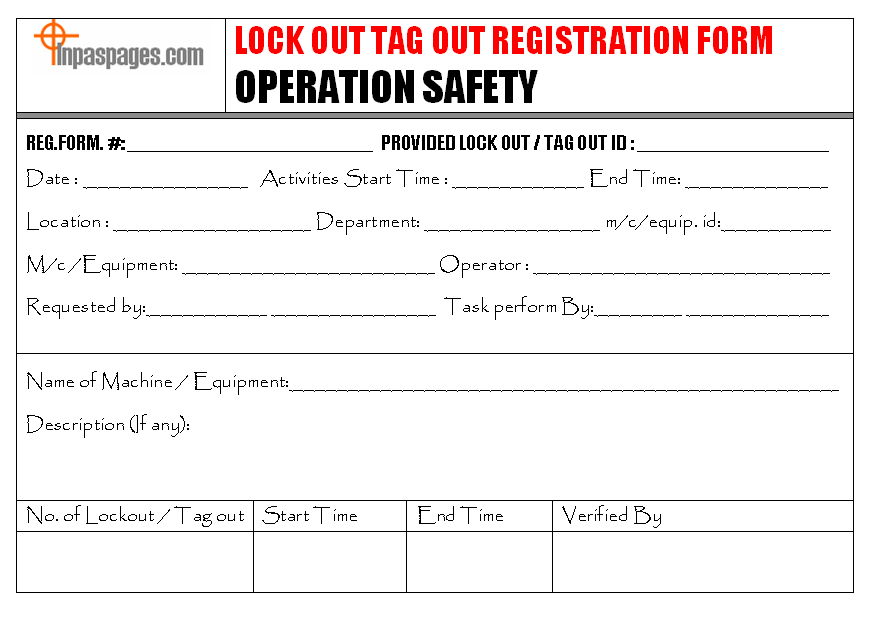
Some organizations use hybrid models—paper for field use, scanned and uploaded post-shift. Others deploy tablets at lockout stations. The key is matching the system to your workflow, not chasing tech for its own sake.
5 LOTO Log Sheet Templates and Tools
You don’t need to build from scratch. These proven options balance compliance and usability.
1. OSHA-Compliant LOTO Log (Free Template) - Format: PDF/Excel - Best for: Small businesses needing a basic, printable log - Strengths: Aligns with 29 CFR 1910.147, easy to customize - Limitation: No automation or alerts
2. SafetyCulture (iAuditor) - Format: Mobile app + cloud - Best for: Teams using smartphones for safety checks - Strengths: Real-time sync, photo uploads, offline mode - Limitation: Subscription cost; learning curve
3. Setex LOTO Management System - Format: Web-based with RFID integration - Best for: High-risk industries (oil & gas, chemicals) - Strengths: Tracks physical locks via RFID, audit trails - Limitation: High setup cost, requires hardware
4. EcoBCM Lockout Module - Format: Add-on for existing CMMS - Best for: Facilities already using maintenance software - Strengths: Integrates with work orders, asset history - Limitation: Dependent on parent system
5. Custom In-House Template (Google Workspace or SharePoint) - Format: Editable digital form - Best for: Mid-sized companies with IT support - Strengths: Full control, low cost, scalable - Limitation: Requires internal maintenance
Choose based on your team’s habits, not just features. A simple, well-used paper log beats a neglected digital platform.
How to Audit Your LOTO Log Sheets for Real Impact
A log sheet is only as good as its consistency. Quarterly audits should go beyond “Are forms filled out?” and ask:
- Are entries legible and complete?
- Do lock application and removal times align with work orders?
- Are unauthorized personnel ever listed?
- Are duplicate lock numbers used?
- Are logs stored securely and retrievable?
Audit findings should feed into refresher training. If 30% of logs miss signatures, don’t just reprimand—ask why. Is the pen always out of ink? Is the form too long? Fix the system, not just the symptom.
One plant reduced LOTO errors by 70% after discovering that mechanics skipped logs because the nearest binder was a 5-minute walk away. Moving the log station to the equipment room fixed the problem.
Final Thoughts: Make LOTO Logs Part of Your Safety Culture
Lock out tag out log sheets aren’t just compliance artifacts. They’re a reflection of how seriously your organization takes safety. A well-maintained log shows respect for workers, clarity in process, and confidence in operations.
Don’t treat them as afterthoughts. Design them with care. Train teams to use them rigorously. Audit them regularly.
The next time a technician reaches for a wrench near live equipment, the log sheet might be the only thing standing between routine maintenance and a life-altering injury.
Action step: Pull your last 10 LOTO logs today. Check for completeness, accuracy, and clarity. If they wouldn’t hold up in an OSHA inspection, redesign them now—before an incident forces the issue.
FAQ
What should you look for in Lock Out Tag Out Log Sheets: Why They Matter and How to Use Them? Focus on relevance, practical value, and how well the solution matches real user intent.
Is Lock Out Tag Out Log Sheets: Why
They Matter and How to Use Them suitable for beginners? That depends on the workflow, but a clear step-by-step approach usually makes it easier to start.
How do you compare options around Lock Out Tag Out Log Sheets: Why They Matter and How to Use Them? Compare features, trust signals, limitations, pricing, and ease of implementation.
What mistakes should you avoid? Avoid generic choices, weak validation, and decisions based only on marketing claims.
What is the next best step? Shortlist the most relevant options, validate them quickly, and refine from real-world results.