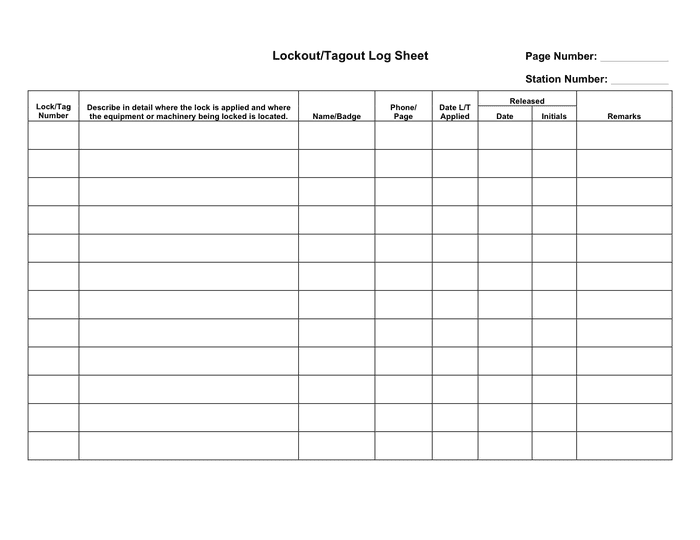
Most industrial accidents involving machinery stem from one fatal oversight: failure to control hazardous energy. Workers assume a machine is off. They begin maintenance. A switch gets flipped—intentionally or not—and lives change in seconds. A lockout tagout safety poster isn’t just wall decoration. It’s a frontline defense.
These visual tools serve as constant, silent reminders of the procedures that protect lives during servicing and maintenance. When designed and placed correctly, they reinforce compliance, clarify steps, and reduce the risk of accidental energization. Yet too many workplaces treat them as box-ticking exercises—generic printouts taped in dim corners, ignored and ineffective.
This guide breaks down what makes a lockout tagout safety poster truly functional—not just compliant. From design best practices to real-world placement strategies, you’ll learn how to turn a simple sign into a critical safety asset.
Why Lockout Tagout Posters Matter More Than You Think
Lockout tagout (LOTO) is more than a procedure—it’s a culture. OSHA estimates that proper LOTO practices prevent nearly 120 fatalities and 50,000 injuries annually in the U.S. alone. Despite this, compliance gaps persist. One study found that over 20% of OSHA citations in manufacturing relate to LOTO violations.
A well-designed lockout tagout safety poster bridges the gap between policy and practice. It transforms abstract procedures into actionable visuals. Workers under pressure, in noisy environments, or with varying language proficiencies can grasp key safety steps at a glance.
Consider this: during a maintenance shift at a Midwest food processing plant, a technician began disassembling a conveyor system. The lockout was applied, but no tag explained why or who had locked it. Another employee, unaware, removed the lock, thinking it was forgotten. The machine started. The technician lost two fingers.
A simple tagout safety poster—placed near the energy isolation point—could have listed required steps, included a "Do Not Operate" warning, and clarified accountability. The accident may have been avoided.
Posters work because they are persistent. Unlike training sessions that fade, or procedures buried in binders, a poster stays visible—repeating the message every single shift.
What Makes an Effective Lockout Tagout Safety Poster
Not all safety posters are created equal. A cluttered, text-heavy sign with vague warnings won’t stop complacency. Effective posters combine clarity, compliance, and context.
Key Design Elements
- Clear Hierarchy of Information
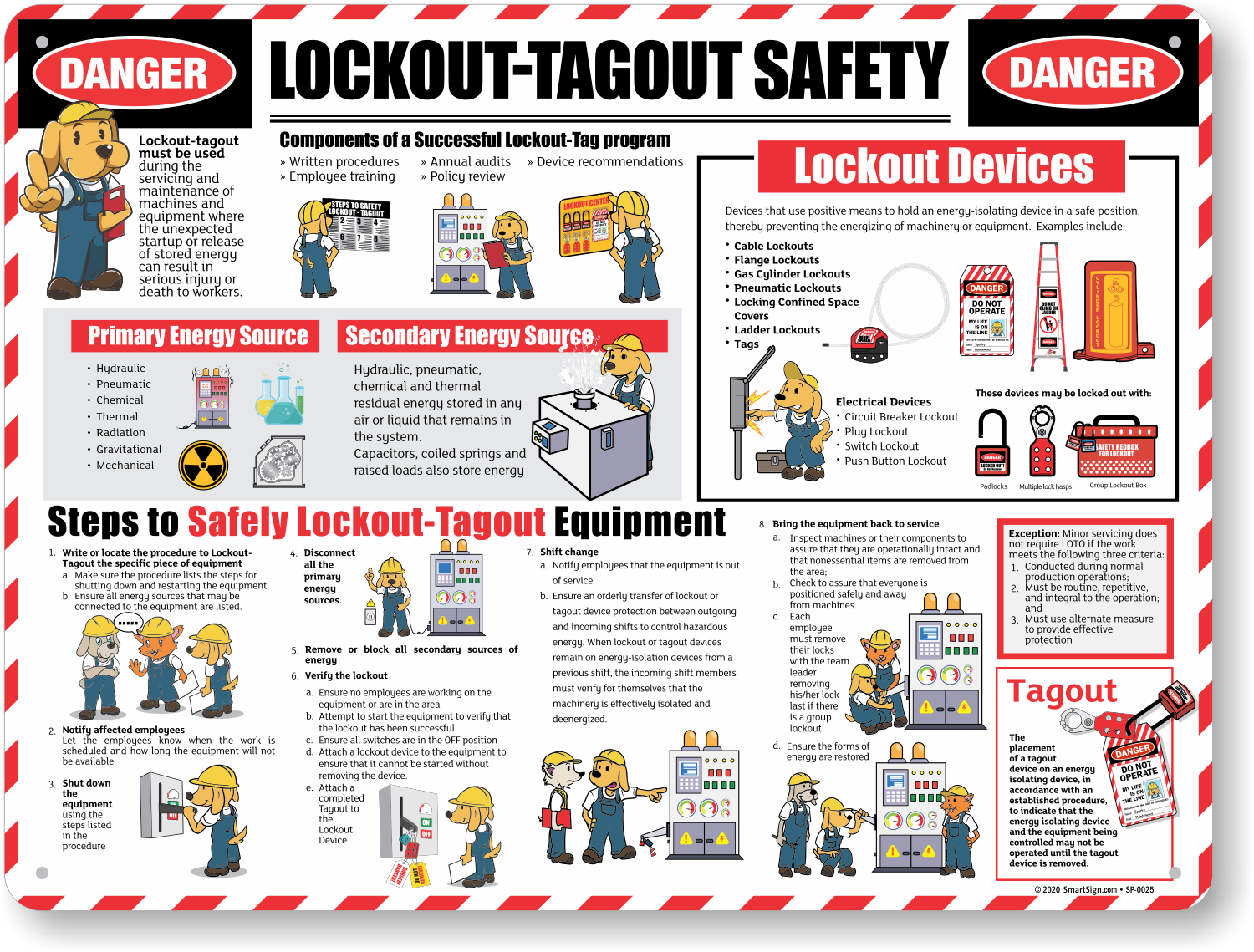
- Start with the most critical message: "LOCKOUT/TAGOUT REQUIRED BEFORE SERVICE." Use bold, high-contrast typography. Secondary details—like step-by-step procedures—follow in descending visual importance.
- Visual Flow
- Use icons or illustrations to represent each step: turning off power, applying lock, tagging, verifying isolation. A flowchart layout works better than paragraphs.
- Multilingual Support
- In diverse workplaces, a poster in English only is a compliance risk. Include Spanish or other common languages using side-by-side layouts or simplified pictograms.
- OSHA-Aligned Messaging
- Ensure language matches OSHA 29 CFR 1910.147 standards. For example:
- - “Verify zero energy state”
- - “Only the authorized employee may remove the lock”
- - “Testing controls must be done safely”
- Durability and Placement
- Print on weather-resistant, laminated material. Mount at eye level near lockout points—control panels, circuit breakers, machinery start stations.
Common Mistakes That Undermine Poster Effectiveness
Even compliant posters fail when they ignore human behavior. These mistakes are widespread:
- Generic Templates
- Using a one-size-fits-all poster across departments. A hydraulic press requires different warnings than an electrical substation.
- Overloading with Text
- Crowding a poster with legal disclaimers and full policy excerpts. Workers won’t read it. Use bullet points and visuals instead.
- Poor Placement
- Hanging posters in break rooms or hallways instead of near actual energy isolation points.
- No Ownership
- Failing to include space for the worker’s name, date, and equipment ID on tagout sections.
- Infrequent Updates
- Procedures change. Equipment gets upgraded. Posters that aren’t reviewed annually become outdated and misleading.
A paper mill in Oregon reduced LOTO incidents by 68% in one year—simply by replacing generic posters with site-specific versions that included QR codes linking to digital LOTO checklists.
Where to Place Lockout Tagout Safety Posters for Maximum Impact
Location determines visibility. A poster only works if it’s seen at the moment of decision.
Critical Placement Zones
| Location | Purpose |
|---|---|
| Near main disconnects | Reminds workers to isolate energy before access |
| Inside maintenance closets | Guides technicians during routine servicing |
| Adjacent to control panels | Reinforces lockout before operation checks |
| At entry points to machine zones | Acts as a final warning before entering hazardous areas |
| Beside PPE stations | Links lockout with other safety gear requirements |
Don’t scatter posters randomly. Conduct a walkthrough with maintenance leads. Identify where decisions are made—and place posters there. One facility installed illuminated LOTO signs above breaker panels. Incident reports dropped 42% within six months.
Also consider temporary posters for mobile equipment or contract work. Magnetic or adhesive-backed versions can be moved as needed.
Designing a Custom Lockout Tagout Poster: A Practical Example
Let’s walk through creating a poster for a packaging line with rotating blades and pneumatic systems.
Header (Top 20%) - Bold red banner: “LOCKOUT/TAGOUT REQUIRED – HAZARDOUS ENERGY” - Icon: A hand placing a lock on a circuit switch - Emergency number: “In case of incident: Call 555-EXT-911”
- Middle Section (50%)
- - Step-by-Step Visual Guide:
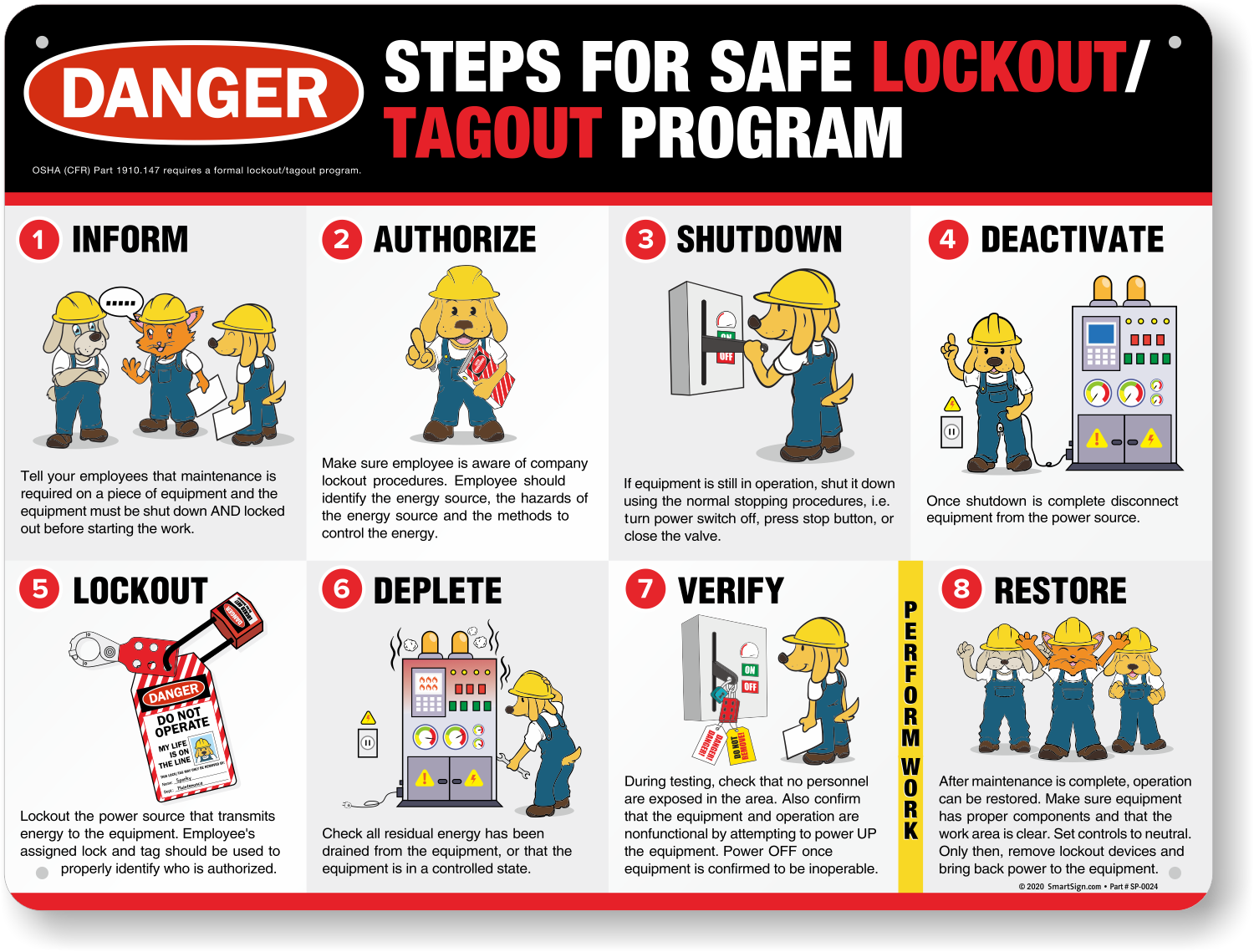
- Shut off machine at control panel
- Isolate main power and pneumatic valves
- Apply personal lock and tag
- Release stored energy (bleed air lines, lower hydraulic arms)
- Verify zero energy (test start, check gauges)
- - Use numbered circles with simple line art
Bottom Section (30%) - “Tag Must Include:” - Name of authorized employee - Date and time - Reason for lockout - Warning: “DO NOT OPERATE EQUIPMENT – WORK IN PROGRESS” - Compliance note: “Per OSHA 1910.147”
Print in 18” x 24” format, laminated, with UV-resistant ink. Mount within 3 feet of the main disconnect.
This isn’t theoretical. A beverage bottler used this format across 14 lines. Maintenance supervisors reported a 30% increase in procedure adherence during audits.
Digital vs. Static Posters: Which Works Better?
The rise of digital signage brings new options—but not always better results.
Static Posters
- Pros: Low cost, always on, no power needed, resistant to harsh environments
- Cons: Can’t be updated remotely, limited interactivity
Digital Displays
- Pros: Can rotate messages, show real-time alerts, integrate with LOTO software
- Cons: Expensive, require power and network, prone to downtime
In most industrial settings, static posters win. They’re reliable and universal. However, digital screens add value when: - Used in central control rooms to display active lockouts - Paired with scan-to-lock systems (e.g., QR codes on posters link to digital LOTO logs) - Training reminders are scheduled (e.g., “LOTO refresher due next week”)
A hybrid approach often works best: static posters at machines, digital dashboards in offices.
Integrating Posters Into Your Broader LOTO Program
A poster alone won’t ensure safety. It’s one piece of a larger system.
- Training Reinforcement: Use posters during onboarding. Ask new hires to explain what each section means.
- Audits: Include poster condition and accuracy in monthly safety audits.
- Accountability: Require maintenance logs to reference the poster number or location.
- Feedback Loop: Place a QR code on the poster linking to a form where workers can report issues or suggest improvements.
One automotive parts manufacturer tied LOTO poster compliance to team safety bonuses. Teams that updated and maintained their posters saw fewer downtime incidents and higher morale.
Actionable Steps to Upgrade Your Lockout Tagout Posters
Don’t wait for an incident to act. Improve your LOTO posters now:
- Audit Existing Posters
- Walk each floor. Are they visible? Up to date? Specific to the equipment?
- Customize by Zone
- Create unique posters for electrical, mechanical, hydraulic, and pneumatic systems.
- Use Visual Templates
- Tools like Canva, SafetySign.com, or OSHA’s free resources offer editable LOTO poster templates.
- Add Multilingual Support
- Even if only 20% of staff are non-native speakers, clarity saves lives.
- Involve Workers
- Have maintenance teams review drafts. They’ll catch oversights you might miss.
- Set a Review Schedule
- Reassess posters every 6–12 months or after equipment changes.
- Track Compliance
- Include poster status in OSHA readiness checklists.
A strong lockout tagout safety poster doesn’t just comply—it communicates. It stands between routine work and irreversible harm. Make yours impossible to ignore.
Frequently Asked Questions
What should a lockout tagout safety poster include? It should list key steps (isolate, lock, tag, verify), include warnings, name accountability, and align with OSHA standards. Visuals improve comprehension.
Are lockout tagout posters required by OSHA? OSHA doesn’t mandate posters specifically, but requires that energy control procedures are “readily available” to workers. Posters are a proven way to meet this.
Can I use a digital screen instead of a printed poster? Yes, if the display is always on, accessible, and updated. However, printed posters are more reliable in high-risk zones.
How high should a lockout tagout poster be mounted? At eye level—typically 5 to 6 feet from the ground—and within 3 feet of the energy isolation point.
Should every machine have its own poster? Ideally, yes—especially if lockout steps differ. Group similar machines under one poster only if procedures are identical.
Can a poster replace lockout tagout training? No. Posters support training but don’t replace hands-on instruction and certification.
Where can I get free lockout tagout poster templates? OSHA.gov, NIOSH, and safety suppliers like Grainger or Brady offer free, downloadable templates.
FAQ
What should you look for in Lockout Tagout Safety Poster Essentials You Need Now? Focus on relevance, practical value, and how well the solution matches real user intent.
Is Lockout Tagout Safety Poster Essentials You Need Now suitable for beginners? That depends on the workflow, but a clear step-by-step approach usually makes it easier to start.
How do you compare options around Lockout Tagout Safety Poster Essentials You Need Now? Compare features, trust signals, limitations, pricing, and ease of implementation.
What mistakes should you avoid? Avoid generic choices, weak validation, and decisions based only on marketing claims.
What is the next best step? Shortlist the most relevant options, validate them quickly, and refine from real-world results.